STEM Tinkering & Innovation Lab
Where curiosity transforms into creation through hands-on tools and real-world challenges.
About
Where Curiosity Meets Creation
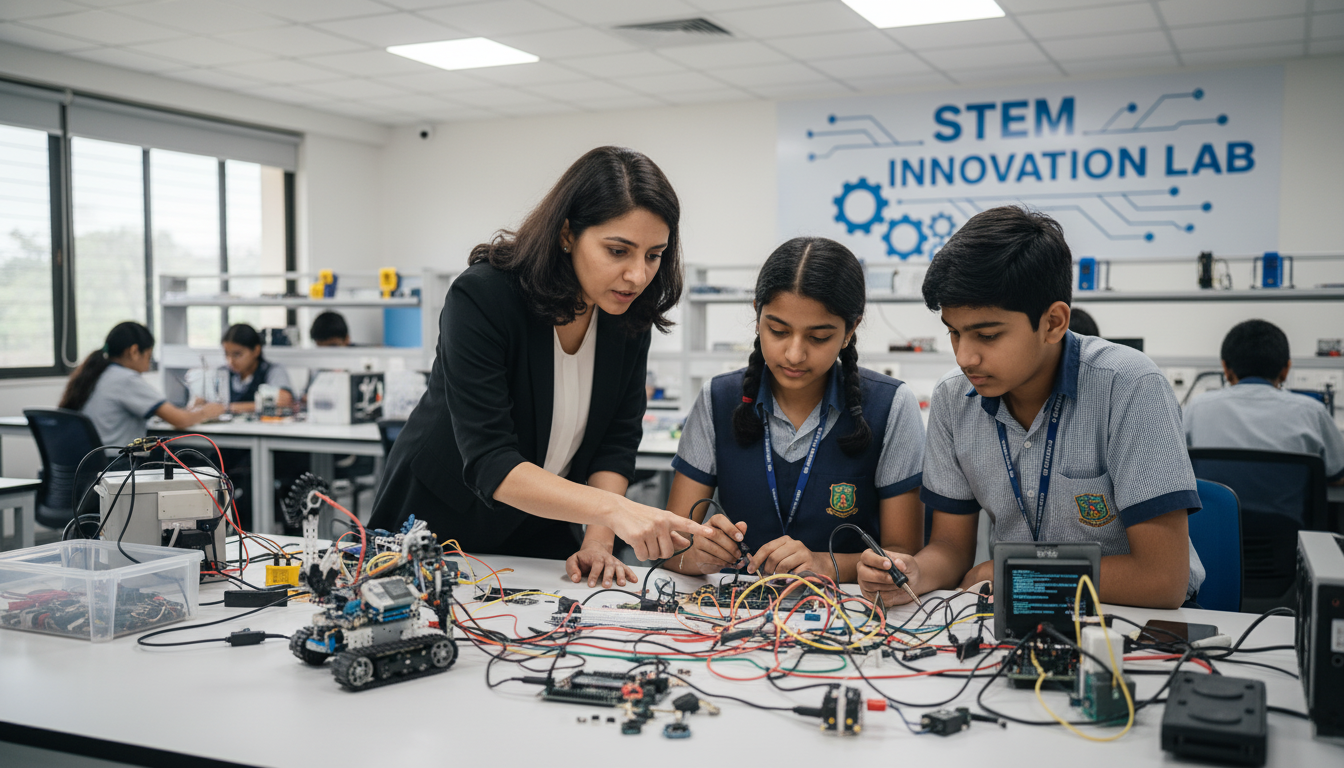
Students explore science, engineering, and problem-solving through hands-on tools, electronics, and DIY components. A true STEM makerspace where curiosity meets creation — aligned with NEP 2020 and Atal Tinkering Lab guidelines.
What Students Will Do
Core Learning Experiences
Electronics & Circuits
Students work with breadboards, sensors, resistors, and microcontrollers to understand how electronic systems function — from simple circuits to IoT prototypes.
Maker Tools
3D printers, laser cutters, hand tools, and craft materials — everything that is needed to go from the ideation stage to a working prototype In one session
Problem-Based Projects
Real-world challenges drive every session. Students identify problems, brainstorm solutions, build prototypes, test, iterate, and present — the full engineering cycle.
What's Inside the Lab
Tools, Kits & Components
A complete tinkering ecosystem built around the four NITI Aayog ATL equipment packages and our signature partner kits. Every lab is configured to your grade structure, space and budget. Swipe to explore →
Open-source microcontroller boards, breadboards, jumper wires, full resistor & capacitor sets, LEDs, push-buttons and multimeters — plus a wide sensor bank (IR, ultrasonic, temperature, humidity, soil-moisture, motion).
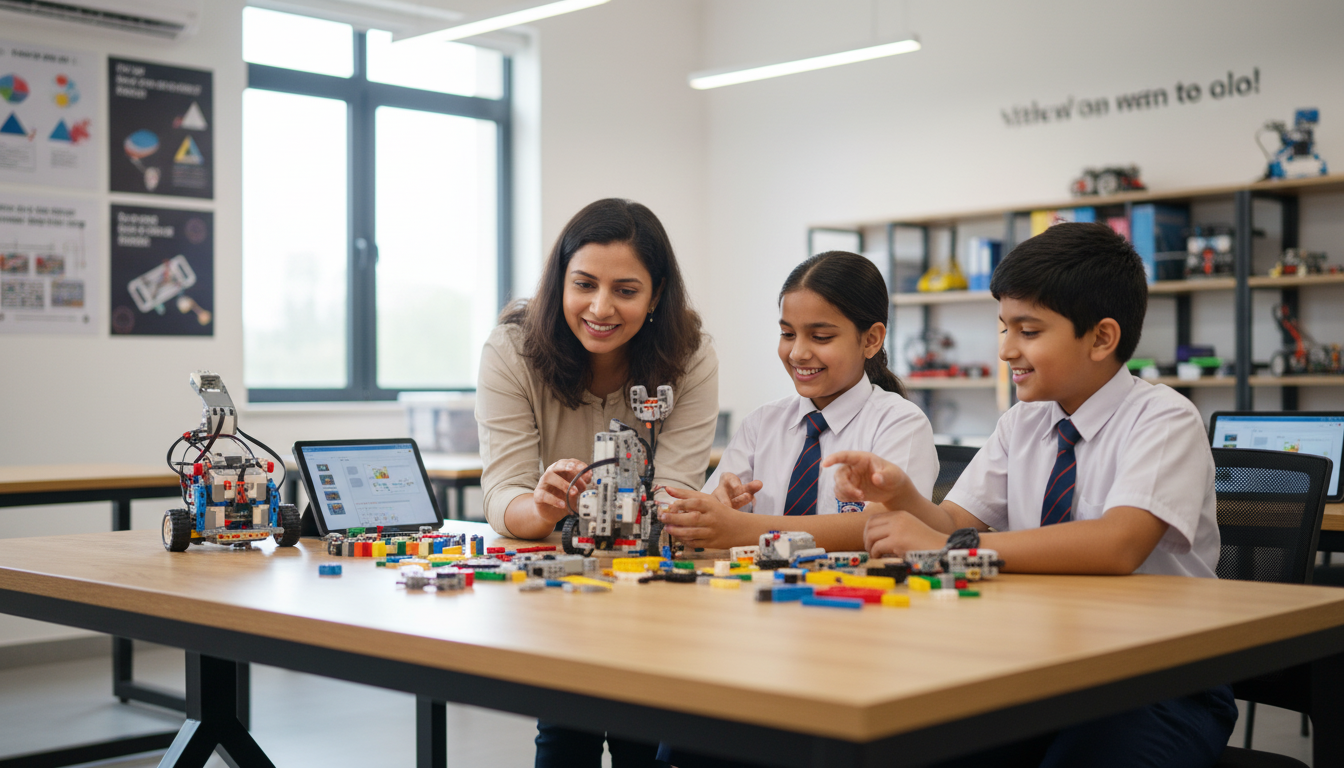
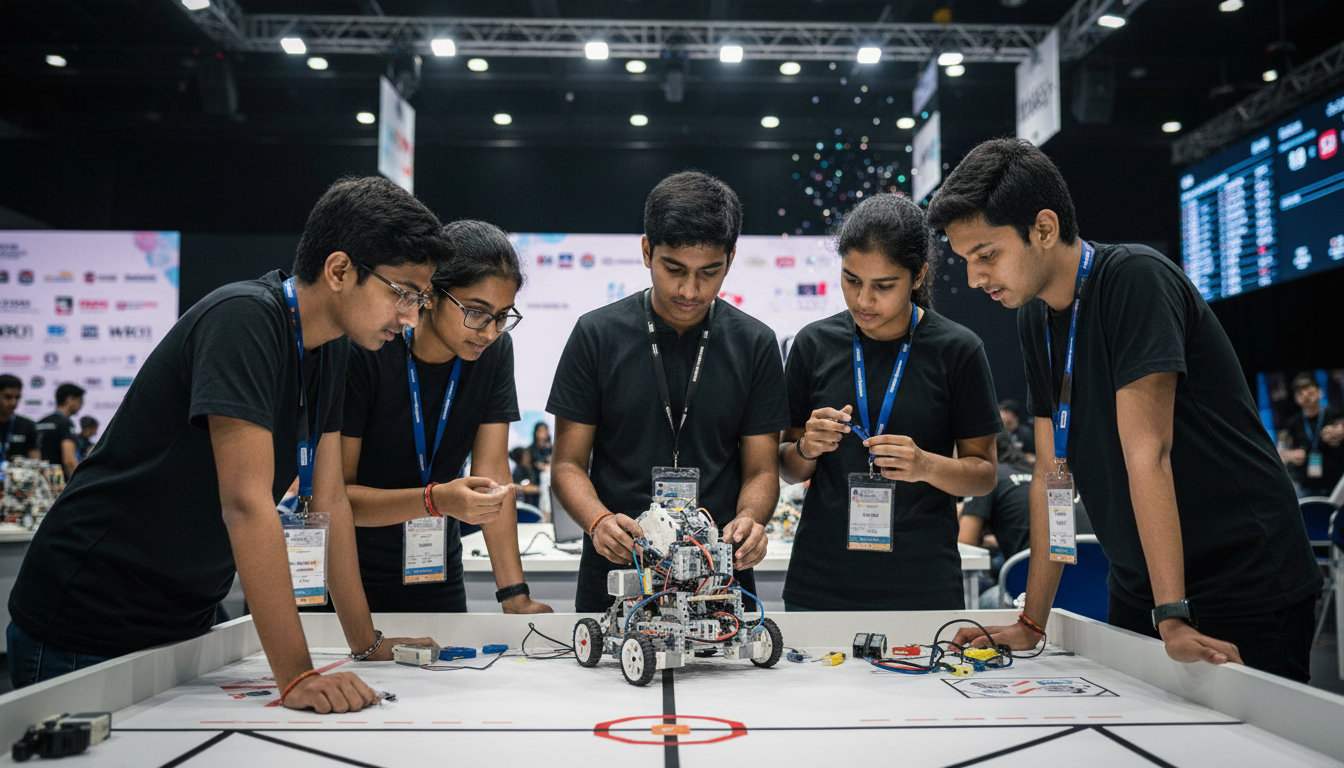
LEGO® Education SPIKE Essential & Prime, fischertechnik metal/plastic kits, Arckit architecture sets and Maker & Coder NEP-aligned packs — the building blocks for WRO and FLL India teams.
Classroom-safe 3D printer with PLA filament, foam-core & cardboard sheets, modelling tools and digital callipers — everything to move from idea to working prototype in a single session. Laser/vinyl cutter available as an advanced add-on.
Pliers, screwdrivers, wire-strippers, files, hex keys, measuring tapes, helping-hands and magnifying lamps — mounted on tool-organisation boards so every young engineer works safely and tidily.
Scratch, PictoBlox (block + Python), Tinkercad, Arduino IDE and MIT App Inventor — a free, school-friendly toolchain that takes students from block-based coding to real C++ and CAD. Fusion 360 for senior grades.
Regulated power supply, safety equipment, tinkering workbenches, modular storage and lab signage — the infrastructure layer that makes the space safe, organised and inspection-ready from day one.
Corrugated cardboard, MDF/foam-board, popsicle sticks, jute, recyclable plastics, copper tape and craft essentials — low-cost, hands-on materials that keep tinkering affordable and continuous.
Curriculum by Age & Grade
A Progressive Learning Pathway
Aligned with NEP 2020 and NCF 2023. 90+ structured lessons map a continuous journey from cardboard engineering in Grade 3 to entrepreneurial capstones in Grade 12.
Foundation
- Cardboard & craft engineering
- Simple circuits with LEDs & batteries
- ScratchJr & block-based coding
- LEGO SPIKE Essential play-builds
Builder
- Breadboarding & multimeter use
- Arduino UNO starter projects
- Tinkercad 3D modelling & printing
- Intro to Python & advanced Scratch
Innovator
- IoT prototypes & sensor networks
- Fusion 360 parametric design
- Python, C++ & embedded coding
- Design-thinking sprints
Leader
- Capstone innovation projects
- AI integration & data-driven builds
- Entrepreneurship & pitch craft
- Patent filings & competitions
Learning Outcomes
Skills Your Students Will Build
Mapped to NEP 2020 21st-century competencies, the P21 Framework, and our proprietary 5C Methodology.
Cognitive
- Critical thinking
- Problem solving
- Design thinking
- Computational thinking
- Scientific temper
Technical
- Electronics literacy
- CAD & 3D modelling
- Coding & algorithms
- Rapid prototyping
- Tool fluency
Social
- Collaboration
- Communication
- Peer feedback
- Leadership
- Empathy
Character
- Resilience & grit
- Curiosity
- Ethical reasoning
- Entrepreneurship
- Self-directed learning
Built by India's Most Trusted STEM Partner
One partner | End-to-end support | Zero complexity
How Learning Happens
The Innovation Cycle
Every session follows a six-step design-thinking loop. Students rotate through the cycle many times per project — building deep, iterative learning rather than one-off builds.
01 · Empathize
Observe real-world problems and the people they affect.
02 · Define
Frame a sharp, specific problem statement to solve.
03 · Ideate
Brainstorm and sketch many bold, wild ideas.
04 · Prototype
Build a fast, rough working version of the idea.
05 · Test
Try it, fail forward, learn and iterate again.
06 · Share
Present, celebrate and document the journey.
Frequently Asked Questions
Everything You Need to Know
A typical lab works in 600–1,200 sq ft. We design layouts as compact as 500 sq ft for smaller schools and modular setups for larger campuses — including dedicated zones for electronics, fabrication, design, and presentation.
Yes. Equipment, curriculum, and pedagogy meet or exceed NITI Aayog's Atal Tinkering Lab guidelines, NEP 2020 21st-century skill mandates, and CBSE Skill Lab specifications.
Yes — every setup includes a 20-hour certified teacher training programme, year-round masterclasses, lesson-plan libraries, and a dedicated mentor for the first 12 months.
The lab is fully modular. Entry-level packages start under ₹10 lakh; comprehensive setups with 3D printer, laser cutter, and full kit libraries range ₹15–40 lakh. We help schools tap CSR funding and ATL grants where applicable.
Both. The STEM Tinkering & Innovation Lab works as a perfect standalone setup for schools just starting their STEM journey, and also serves as Module 01 of the complete 5-module Future Leaders Lab ecosystem.
Monthly mentor visits, quarterly curriculum refresh, dedicated WhatsApp helpline, annual student showcase, free consumable restocking for the first year, and free access to RoboGenius Academy for teacher upskilling.
Latest from Our STEM Education Blog
Expert insights on robotics education India, STEM lab setup, LEGO Education, Arduino programs, and future-ready schools

Let's Build Your School's Future-Ready Lab
From concept to classroom in 30 days. Our team handles design, supply, installation, training, and ongoing support.