NEP 2020 Compliant STEM Lab Setup Implementation Guide
NEP 2020 didn’t just suggest that schools modernize their STEM teaching — it made it non-negotiable. Experiential learning, computational thinking, coding from Class 6, vocational exposure, and interdisciplinary STEM are all woven into the policy. Yet when most school leaders sit down to actually plan a NEP 2020 compliant STEM lab setup, they run into the same problem: there’s no single rulebook.
This guide pulls the rules, the realities, and the practical setup steps into one place. If your school is planning its first STEM lab — or trying to upgrade one that’s already there — this is the playbook
Why a NEP 2020 Compliant STEM Lab Setup Is No Longer Optional
NEP 2020 is the most ambitious rewiring of Indian education in nearly four decades. It pushes schools away from rote memorisation and towards hands-on, inquiry-driven learning. STEM labs sit right at the heart of this shift because they’re the easiest, most visible way to operationalise the policy inside a regular school day.
A well-designed STEM lab does three things a textbook can’t. It gets students building, not just reading. It introduces coding, robotics, AI, and electronics as tools — not subjects. And it gives teachers a structured space to run interdisciplinary projects that pull together science, math, design, and computer science.
The core NEP 2020 expectations for STEM infrastructure
While NEP 2020 doesn’t prescribe a single blueprint, the policy direction is clear. Schools are expected to offer coding from Class 6, integrate experiential learning across subjects, expose students to emerging tech like AI and IoT, and build vocational skills early. A NEP 2020 compliant STEM lab setup is how most schools meet all four asks in one move.
Step 1: Define the Purpose of Your NEP 2020 Compliant STEM Lab Setup
Before you look at kits or quotes, decide what you actually want the lab to do. This single decision will save you lakhs of rupees and months of confusion.
Option A: A foundational STEM lab for grades 1–5
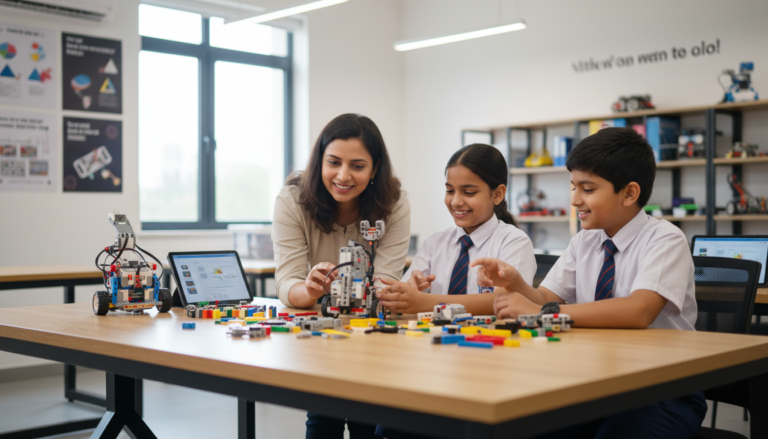
Focus on screen-free building, early engineering concepts, simple coding, and storytelling-based projects. Think LEGO BricQ Motion, SPIKE Essential, simple circuit kits, and unplugged coding resources.
Option B: A robotics and coding lab for grades 6–9
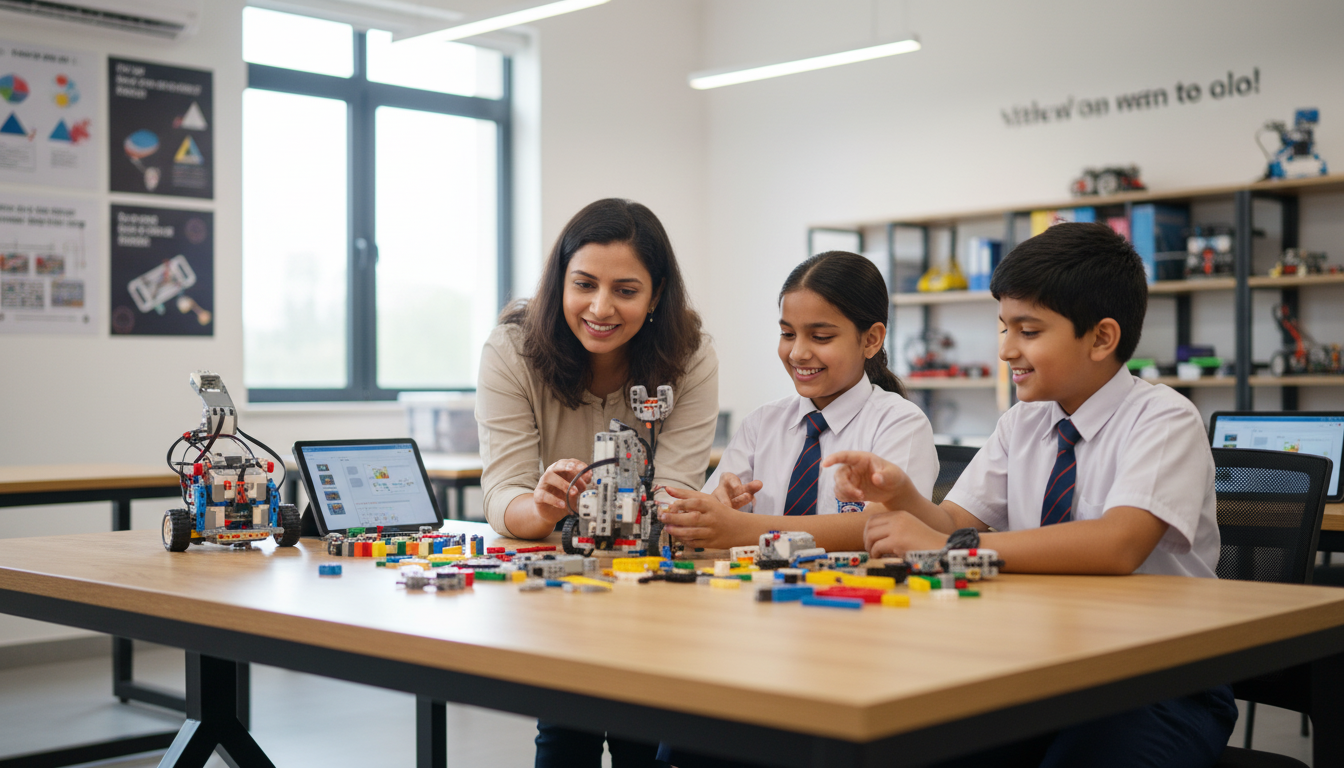
This is where most schools concentrate investment. SPIKE Prime, VEX IQ, Arduino starter kits, and 3D printers form the backbone. Block-based coding transitions into Python and introductory Arduino C.
Option C: An advanced innovation lab for grades 9–12
Aimed at senior-secondary students with serious STEM ambitions. Expect Arduino, Raspberry Pi, IoT modules, AI/ML kits, drones, 3D printers, laser cutters, and full-fledged electronics workbenches.
Step 2: Plan the Physical Space
A NEP 2020 compliant STEM lab setup isn’t just about kits. The room itself matters more than most schools realise.
Ideal room size and layout
Aim for at least 600–800 sq. ft. for a class of 30 students. Break the space into three zones: a build-and-prototype zone with large flat tables, a coding zone with laptops or Chromebooks, and a display zone where student projects live permanently.
Safety, storage, and power
You’ll want lockable storage for kits, reliable power points on every workbench, strong internet, and basic safety gear — especially if you’re introducing soldering, 3D printing, or laser cutting.
Step 3: Choose the Right Mix of STEM Equipment
This is where most schools either over-spend or under-spend. A smart NEP 2020 compliant STEM lab setup is balanced — not flashy.
Robotics and coding kits
LEGO Education SPIKE Prime and SPIKE Essential cover grades 1–9 beautifully. VEX IQ is a strong competition-oriented alternative. For senior grades, Arduino and Raspberry Pi kits unlock real-world electronics and IoT.
Electronics and IoT
Basic electronics kits, breadboards, sensors, actuators, ESP32 boards, and a few IoT-ready modules will let students build genuinely useful projects — home automation, smart farming, health monitoring, and more.
AI, drones, and emerging tech
Teachable Machine, beginner-friendly AI kits, and entry-level educational drones let schools tick the emerging-tech box without overspending. Introduce these from grade 8 onwards.
Fabrication and prototyping
One 3D printer is enough for most schools to begin with. Add a laser cutter only when students are consistently building at that level of complexity.
Step 4: Build a Curriculum That Matches Your STEM Lab
Without a curriculum, even the best lab becomes a photo-op. A NEP 2020 compliant STEM lab setup needs structured weekly lessons, graded outcomes, and project-based assessments that feed into report cards.
Integrate STEM across subjects
Don’t keep STEM as a standalone period. Pull it into science labs, computer science classes, and even social studies projects. Interdisciplinary work is explicitly encouraged by NEP 2020.
Competition pathways
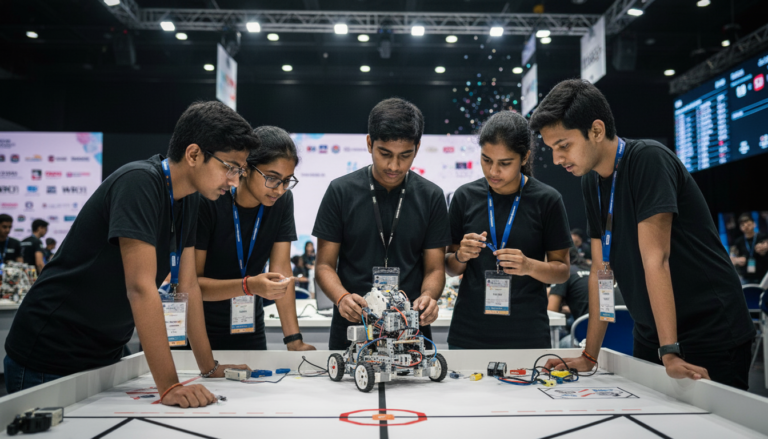
Plan for World Robotics Olympiad (WRO), First LEGO League (FLL), CBSE robotics challenges, and Atal Tinkering Marathon participation. These give students real goals and your school real visibility.
Step 5: Invest in Teacher Training
This is the step schools skip at their own cost. Kits don’t teach; teachers do. Every NEP 2020 compliant STEM lab setup should include certified teacher training, ongoing mentorship, and a clear professional development plan for at least two STEM teachers per grade band.
Step 6: Measure Impact
Track student participation in STEM projects, competition outcomes, project completion rates, and cross-subject grade improvements. If you’re measuring, you’re improving.
Ready to Set Up Your School’s STEM Lab?
Designing a NEP 2020 compliant STEM lab setup from scratch is one of the most impactful investments a school can make today — and one of the easiest to get wrong without the right partner. Talk to RoboGenius for a full assessment, layout, curriculum plan, and teacher training roadmap customized to your school.
FAQs About NEP 2020 Compliant STEM Lab Setup
What is a NEP 2020 compliant STEM lab?
It’s a hands-on STEM and robotics facility that aligns with NEP 2020’s emphasis on experiential learning, coding from Class 6, and exposure to AI, IoT, and emerging technologies.
How much does it cost to set up a STEM lab in India?
A foundational STEM lab can start in the modest lakhs, while a full-fledged innovation lab with AI, IoT, and fabrication tools can go significantly higher. Most schools begin with a core setup and expand in phases.
What is the difference between a STEM lab and an Atal Tinkering Lab (ATL)?
An ATL is a specific NITI Aayog-funded programme with its own equipment list and guidelines. A NEP 2020 compliant STEM lab is broader — schools can design it around their grade structure, pedagogy, and goals.
What equipment is essential for a STEM lab?
Robotics kits, electronics and IoT modules, coding laptops or Chromebooks, a 3D printer, basic hand tools, and a good internet connection form the essential base.
How do schools get funding for a STEM lab setup?
Schools typically fund STEM labs through infrastructure budgets, CSR partnerships, ATL grants where applicable, and phased investment tied to fee structures.
Does NEP 2020 mandate coding in schools?
Yes. NEP 2020 introduces coding from Class 6 onwards, which makes a coding-capable STEM lab one of the most practical ways to stay compliant.