World Robotics Olympiad (WRO) Training Guide
Few experiences change a student the way a serious robotics competition does. Of all the competitive pathways in Indian school STEM, the World Robotics Olympiad — better known as WRO — sits at the very top. Teams that make it to the international finals don’t just win trophies; they walk away with engineering skills, teamwork instincts, and a level of confidence that shapes the rest of their academic journey.
This World Robotics Olympiad (WRO) training guide is written for school leaders and coaches doing the actual work of getting teams ready: choosing categories, sourcing kits, running practice sessions, and building a team culture that wins.
What Is the World Robotics Olympiad and Why WRO Training Matters
The World Robotics Olympiad is one of the biggest international robotics competitions for school students, with 90+ participating countries and hundreds of thousands of students competing every year. The Indian WRO chapter runs regional and national rounds, with top teams qualifying for the international finals.
Winning at WRO is hard — but preparing for WRO, even without winning, is transformative. A structured World Robotics Olympiad (WRO) training program teaches students CAD thinking, mechanical design, programming, debugging under pressure, and how to present their work to a jury.
Understanding the WRO Categories Before You Start Training
A solid World Robotics Olympiad (WRO) training plan starts with choosing the right category for your team. WRO competitions usually run across four main categories, and each demands a different training approach.
RoboMission
The classic WRO category. Teams build autonomous robots that complete specific missions on a standardised mat. Missions change every year and are announced by WRO India. This is where most new teams begin.
RoboSports
Robot vs. robot match-play with dynamic scenarios. This category rewards fast iteration, defensive design, and strong sensor-based decision-making.
Future Innovators
The open-ended research and innovation category. Teams identify a real-world problem and build a robotic solution — with a strong emphasis on presentation, storytelling, and social impact.
Future Engineers
The self-driving car category, aimed at senior students. Expect advanced path-planning, computer vision, and serious programming.
Age Categories You Need to Plan Around
WRO groups teams into Elementary, Junior, and Senior age categories — roughly corresponding to primary, middle, and senior school. Your World Robotics Olympiad (WRO) training plan should be built around the category your strongest teams will fall into.
Building a Winning World Robotics Olympiad (WRO) Training Program
Here’s what most schools get wrong. WRO training isn’t a six-week crash course before nationals. Winning teams train consistently across the year, and their schools treat robotics like they’d treat the senior football team.
Step 1: Identify your team early
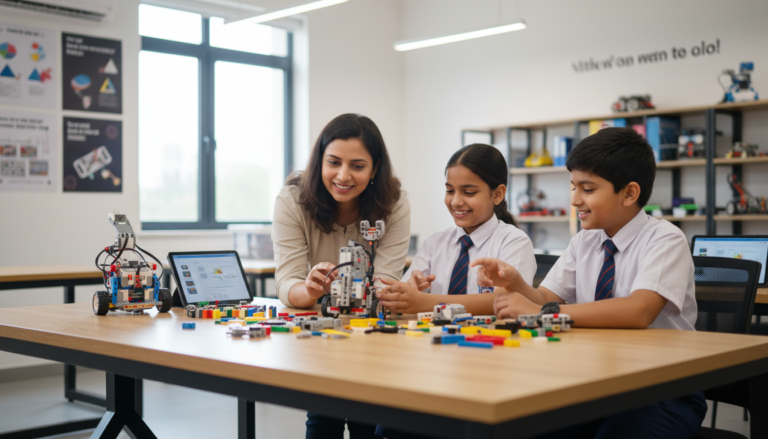
Start scouting for WRO-potential students in grades 5–6. The earlier students start building, the more comfortable they become with iterative engineering. By grade 8, your strongest students should have 2–3 years of LEGO SPIKE Prime or Arduino experience behind them.
Step 2: Run a year-round training calendar
Break the year into four clear phases. The first phase is foundations — reviewing mechanisms, programming concepts, and last year’s missions. The second phase is strategy — studying the current season’s rules line by line. The third phase is building and iteration — prototyping, testing, and tearing down. The fourth phase is competition prep — timed runs, jury simulations, and mental preparation.
Step 3: Invest in the right equipment
For RoboMission and RoboSports, LEGO Education SPIKE Prime is the most widely used platform at WRO, alongside LEGO MINDSTORMS EV3 kits that are still in use across many Indian schools. For Future Engineers and higher-end categories, Arduino and Raspberry Pi setups with proper sensor suites become essential.
Step 4: Build a strong coaching layer
Every World Robotics Olympiad (WRO) training program needs at least one trained coach. That coach doesn’t need to be the best programmer in the room — they need to be the person who can run structured practice, give honest feedback, manage egos, and keep momentum going when a team hits a wall.
Step 5: Run mock competitions
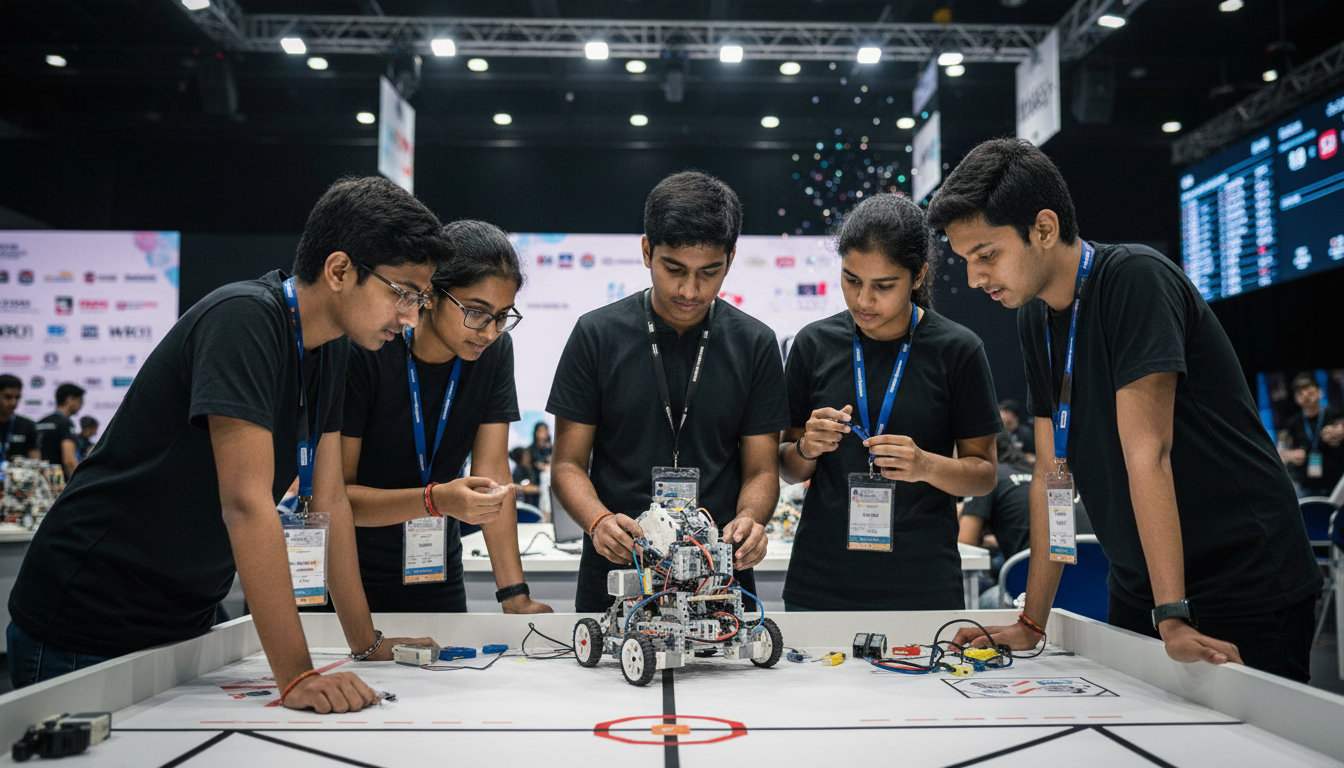
Nothing prepares a team for WRO day like internal mock competitions. Run at least three mock rounds a year, each with judges, timers, and full rule enforcement. The first mock is always messy. By the third, your teams will be noticeably sharper.
Coaching Mindset: What WRO Winners Do Differently
Winning WRO teams share a few habits. They document every run. They debug calmly under pressure. They build modular robots so they can swap attachments fast. They practise presentations as seriously as they practise code. And — this is the one that surprises most new coaches — they fail deliberately during training to stress-test their robots.
Good World Robotics Olympiad (WRO) training programs build these habits intentionally. They’re not accidents.
How Schools Can Register for WRO India
School teams register through the official WRO India portal each season. Registration for the next season begins right after the WRO India Nationals, with regional rounds running through the second half of the upcoming year. Schools should budget for team registration fees, travel to regional and national venues, and equipment upgrades aligned to the year’s challenge.
Ready to Build a WRO-Ready Team at Your School?
A serious World Robotics Olympiad (WRO) training program needs the right kits, a trained coach, a year-long calendar, and a school culture that backs it. RoboGenius works with schools across India to set up WRO-ready robotics programs — from equipment and curriculum to coach training and mock competitions. Talk to us and let’s build your school’s first WRO team.
FAQs About World Robotics Olympiad (WRO) Training
What is the World Robotics Olympiad?
The World Robotics Olympiad is an international robotics competition for school students across 90+ countries, with age-based categories and multiple challenge formats including RoboMission, RoboSports, Future Innovators, and Future Engineers.
How do schools register for WRO India?
Schools register through the official WRO India website when the season opens — usually between April and July — by submitting team details, coach information, and registration fees.
What age groups can participate in WRO?
WRO has Elementary, Junior, and Senior age categories covering students from roughly 8 years old to 19 years old, with exact cutoffs varying slightly by category.
Which robotics kit is used for WRO training?
LEGO Education SPIKE Prime and LEGO MINDSTORMS EV3 are the most widely used kits for RoboMission and RoboSports. Advanced categories like Future Engineers often use Arduino, Raspberry Pi, and custom-built platforms.
How many hours of training do WRO participants need?
Serious WRO teams typically train 4–6 hours a week through the year, scaling up to daily practice in the two months leading up to the competition.
What are the WRO categories for 2026?
WRO traditionally runs RoboMission, RoboSports, Future Innovators, and Future Engineers as its main categories. Specific missions and themes are announced each season, so schools should always refer to the official WRO India calendar for the latest details.
Is WRO good for a student’s academic profile?
Yes. WRO participation — especially regional and national-level wins — is highly regarded in school records, scholarship applications, and competitive college admissions both in India and abroad.